Recoil Control Is Lying to You: The Hidden Ceiling Inside Your Spray Patterns

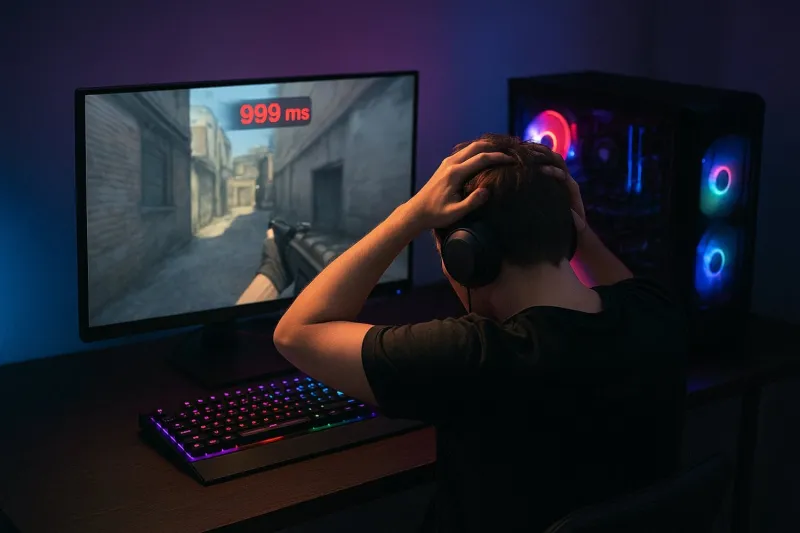
Photo: FPS gamer intense focus computer screen shooting game, via img.freepik.com
You know the routine. Jump into an aim trainer or a practice server, pull out your go-to rifle, and run through that spray pattern until your mouse hand could do it in your sleep. It feels productive. It feels like progress. And for a while, it genuinely is.
But here's the thing nobody in your Discord server wants to say out loud: at some point, that muscle memory stops being a weapon and starts being a cage.
Let's break down why recoil memorization has a hard ceiling — and what you actually need to do to push past it.
The Comfort Trap Nobody Warns You About
When you grind a specific spray pattern long enough, your brain builds what neuroscientists call a motor program — a pre-packaged sequence of movements that fires automatically under familiar conditions. That's great when you're standing still at a known distance, shooting at a stationary target in a practice map you've run five hundred times.
Competitive play is nothing like that.
In a real match, you're moving. Your opponent is moving. The engagement distance shifts mid-fight. You've just taken damage and your crosshair is off-axis. You swapped weapons because your primary ran dry. Every one of those variables degrades the value of a pattern you memorized under sterile conditions, and your brain — which trained for that specific sequence — starts misfiring.
The result? You're not adapting. You're overriding. And overriding a deeply grooved motor program under pressure is one of the hardest things the human nervous system can do.
Why the AK Isn't the M4 (And Your Hands Don't Know the Difference)
This gets even messier when you factor in weapon variety. In CS2, Valorant, or any tactical shooter with a real weapon pool, the spray patterns between guns can vary wildly — different vertical pull, different horizontal drift timing, different reset windows. Players who have spent months drilling one weapon often unconsciously apply that pattern to every other gun they pick up.
This is called negative transfer in motor learning research, and it's more common in FPS players than most people realize. You reach for the familiar motion, and it betrays you. The Vandal isn't the Phantom. The Krieg isn't the AK. Your hands don't automatically know that, and if your training never forced them to distinguish, you've got a problem.
Pro players — the ones actually winning at LAN events and raking in prize money — aren't just better at spray patterns. They're better at switching between them cleanly and quickly. That's a completely different skill, and it requires a completely different training approach.
What Actual Recoil Mastery Looks Like
Here's the counter-intuitive part: the pros spend less time drilling isolated spray patterns and more time training adaptive recoil management. The distinction matters.
Adaptive recoil management means you're training your ability to read and respond to recoil feedback in real time, rather than executing a pre-loaded script. It's the difference between memorizing a route and actually knowing how to navigate.
Some specific methods worth stealing:
Burst Discipline Over Full Sprays
Instead of training full magazine dumps, pros frequently practice controlled bursts — two, three, four rounds — at variable distances. This forces your aim to stay grounded in moment-to-moment feedback rather than autopilot. It also reflects how most actual gunfights play out, where you're rarely unloading a full mag into a stationary target at a fixed range.
Cross-Weapon Drills in the Same Session
Rather than spending a session exclusively on one weapon, effective recoil training involves cycling between multiple guns without a mental reset period between them. The goal is to make your brain actively recalibrate between patterns, which builds the neural flexibility that pure repetition never develops. It's uncomfortable at first — that's the point.
Moving Target, Moving You
This one sounds obvious but almost nobody actually does it consistently: practice recoil control while strafing. Your spray pattern in a static drill is not your spray pattern when you're counter-strafing and checking an angle simultaneously. Train the version of the skill that shows up in real games, not the idealized version that only exists in practice servers.
The Psychological Side of the Pattern
There's also a mental component here that doesn't get enough attention. When you've drilled a spray pattern into deep muscle memory, it creates a false sense of competence. You feel like you have good recoil control because the motion is smooth and automatic. That confidence is real, but it's calibrated to the wrong scenario.
Under match pressure, when the stakes are real and your heart rate climbs, that false confidence can actually make things worse. You trust the pattern, the pattern fails you, and now you're mid-fight questioning your aim fundamentals — which is the absolute worst time to have that crisis.
Players who've built adaptive recoil skills instead of pattern-dependent ones tend to be more resilient under pressure precisely because they're not relying on a script. They're reading the fight and adjusting. That's a skill that holds up when the nerves kick in.
So What Should You Actually Do?
None of this means spray pattern practice is useless — it's not. Building a baseline familiarity with how each weapon behaves is still valuable, especially when you're first learning a new gun. The mistake is treating that baseline as the destination rather than the starting point.
Once you have a working understanding of a weapon's behavior, shift your practice toward variability. Change your distances. Change your movement states. Switch weapons mid-session. Add time pressure. Introduce scenarios that force your aim to adapt rather than execute.
The goal is to make your recoil control robust — something that holds up when the match situation doesn't match your practice conditions. Because in competitive play at any meaningful rank, the situation almost never matches your practice conditions.
The Bottom Line
Spray pattern memorization is a floor, not a ceiling. It'll get you started, and it'll carry you through lower ranks where opponents are equally locked into their own patterns. But if you're hitting a wall and wondering why your aim feels inconsistent in real matches despite feeling solid in practice, this is almost certainly part of the answer.
True recoil mastery isn't about knowing the pattern. It's about not needing one.